


Building the Fabric Between Strategy & Delivery
June 11, 2025
BIG Professional Exams
September 9, 2025
Mind the Gap: Strategy, Execution and Portfolio Management

In this blog, we are signposting the BIG Conference and our Portfolio Management event 10th December 2025, 12.30 PM UK.
- Strategy Delivery – we know its an issue
- Portfolio Management – the case to do the right things, right
- The BIGger picture
- Find out more….
Strategy Delivery – we know its an issue
We’ve all seen it happen: a strategy looks good on paper but somehow never translates into results. Research shows this is all too common — with around half of projects and programmes failing to deliver on expectations. As Stephen Jenner recently noted in a recorded conversation with David Dunning ahead of our November BIG Conference, if medicine or education had a 50% failure rate, there would be a public outcry. And yet, in many organisations, this reality is quietly accepted.
With almost half of global GDP now delivered through projects and programmes, failure at this scale is no longer something we can afford to shrug off. The real question is: how do we bridge the gap between strategy and execution?
The Case for Portfolio Management
Stephen argues that portfolio management is one of the strongest answers. Every organisation has a portfolio — the issue is whether it is managed as such. Done well, portfolio management helps us:
- Choose the right things to do (and be brave enough to stop the wrong ones)
- Do them at the right time, matching ambition to genuine organisational capacity
- Do them right, by managing dependencies and removing barriers without displacing project and programme managers
It sounds straightforward, but anyone who has wrestled with competing priorities, “pet projects” or overstretched resources knows it requires discipline, focus and a structured approach.
There is also a BIGer picture…
David and Stephen also touched on the bigger picture.
While we may be able to define our Mission Critical Objectives with respect to value creation and strategic change – our organisations MUST obey the law, preserve our value and existence, and deliver performance TODAY against our purpose. These may not be related to our business strategy – but these objectives must be stirred in. Our busienss portfolio is therefore a portfolio of portfolios – balancing business as usual performance, value creation and change,

Beyond The Investment / Change Portfolio
In Managing Portfolios, Stephen highlights the investments required for strategy delivery. Each investment requires leadership time, funding and resources which may be shared across business-as-usual, strategic change initiatives, and ongoing product development. (Is that strategic investment, or BAU investment?)
Portfolio management is powerful in its own right, but when combined with clear, integrated governance it becomes transformational. And even then, process alone is not enough. We need a culture that actively supports delivery. As David put it, culture shouldn’t “eat strategy” — it should be deliberately shaped to help it succeed.
So the challenge becomes: what do we need to build and operate to ensure the investment leg of our strategic stool is balanced with business performance and product development needs – but vitally – HOW DO WE GET THIS ON THE EXEC AGENDA?
What are we talking about?
David and Stephen got together to record a short conversation about their perspectives – to signpost the Conference Session.
- Part 1 – Portfolio Management in Strategy Execution: David and Stephen discussed the critical role of portfolio management in bridging the strategy execution gap, referencing research and practical examples to highlight its importance in organisational success.
- Part 2 – Defining Portfolio Management and Its Organisational Role: Stephen provided a comprehensive definition of portfolio management, describing it as the process of selecting, prioritising, and managing a collection of projects, programmes, and related work to achieve portfolio objectives, with David supporting the need for specialisation.
- Part 3 – Portfolio Structure, Delegation, and Governance: Stephen and David discussed how organisations should structure their portfolios, delegate authority, and maintain governance, referencing best practices and research to support focused and accountable portfolio management. Integration of Portfolio, Strategy, and Culture: Stephen and David explored the interplay between process, strategy, and culture, emphasising that all three pillars are necessary for effective governance and successful portfolio management.
- Part 4 – Portfolio Management and Organisational Prioritisation: David and Stephen addressed the challenges of prioritising investments across strategic, functional, and product domains, and the need for transparency and coordination in portfolio management.
- Part 5 – Extending Portfolio Management Principles Across the Organisation: David and Stephen discussed the potential for project, programme, and portfolio support functions to enable broader organisational performance management, including the application of OKRs and tailored investment criteria.
Below is just a flavour of what’s to come at the Business Integrated Governance Conference in November and December. Stephen will explore the practicalities — from balancing risk and return, to socio-technical prioritisation, to aligning portfolios with benefits that really matter.
Access the full conversation here
Join the Fuller Conversation in December
The Strategy-Execution gap is a reality and furthermore, failures in strategy implementation and project delivery remain all too common.
The answer, disciplined portfolio management which, as Professor Robert Cooper says, “is how you operationalize your Business Strategy”.
This session will focus on five key ways in which portfolio management can effectively align strategy and execution:
- balancing risk and return
- portfolio categorization
- aligning projects with strategy via benefits
- what LSE Professor Larry Phillips refers to as ‘socio-technical’ prioritisation
- regularly re-visiting the investment decision.
Plus
- How does Investment / Change Portfolio Management fit with BIG?
Will you join us to reimagine strategy delivery?
Call to Action:
Register as a FULL Member or as a Conference Member receive a free access code, then with that Register directly to this PAID event on EventBrite here
(Proceeds to our Social Enterprise)
Alongside other expert sessions on BIG, strategy, governance, case studies, and practical guidance on senior stakeholder engagement, it promises to be a thoughtful and pragmatic exploration of how to close the strategy–execution gap for good.
Join our LinkedIn Group or become a Member.
👉 Find out more about the Conference here
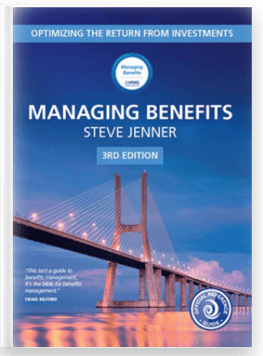
👉 Explore Stephen’s books: Managing Benefits and Managing Portfolios (see below)
👉 Access the BIG Body of Knowledge
👉 Register for FULL Membership to receive your invitation to the 10th December event


In this blog, we are signposting the BIG Conference – 5th November 2025 – and our event 10th December 2025, 12.30 PM UK.
- Strategy Delivery – we know its an issue
- Portfolio Management – the case to do the right things, right
- The BIGger picture
- Find out more….
Strategy Delivery – we know its an issue
We’ve all seen it happen: a strategy looks good on paper but somehow never translates into results. Research shows this is all too common — with around half of projects and programmes failing to deliver on expectations. As Stephen Jenner recently noted in a recorded conversation with David Dunning ahead of our November BIG Conference, if medicine or education had a 50% failure rate, there would be a public outcry. And yet, in many organisations, this reality is quietly accepted.
With almost half of global GDP now delivered through projects and programmes, failure at this scale is no longer something we can afford to shrug off. The real question is: how do we bridge the gap between strategy and execution?
The Case for Portfolio Management
Stephen argues that portfolio management is one of the strongest answers. Every organisation has a portfolio — the issue is whether it is managed as such. Done well, portfolio management helps us:
- Choose the right things to do (and be brave enough to stop the wrong ones)
- Do them at the right time, matching ambition to genuine organisational capacity
- Do them right, by managing dependencies and removing barriers without displacing project and programme managers
It sounds straightforward, but anyone who has wrestled with competing priorities, “pet projects” or overstretched resources knows it requires discipline, focus and a structured approach.
There is also a BIGer picture…
David and Stephen also touched on the bigger picture.
While we may be able to define our Mission Critical Objectives with respect to value creation and strategic change – our organisations MUST obey the law, preserve our value, and deliver performance TODAY against our purpose. Our busienss portfolio is therefore a portfolio of portfolios – balancing business as usual performance, value creation and change,
More of this later….
Portfolio, Business as Usual and Product / Asset Creation pillars
In Managing Portfolios, Stephen highlights the investments required for strategy delivery. But at the BIG Conference, we will also recognise that business performance underpins strategic progress — and that leadership time, funding and resources are shared across business-as-usual, strategic change initiatives, and ongoing product development. (Is that strategic investment, or BAU investment?)
Portfolio management is powerful in its own right, but when combined with clear, integrated governance it becomes transformational. And even then, process alone is not enough. We need a culture that actively supports delivery. As David put it, culture shouldn’t “eat strategy” — it should be deliberately shaped to help it succeed.
So the challenge becomes: what do we need to build and operate to ensure the investment leg of our strategic stool is balanced with business performance and product development needs – but vitally – HOW DO WE GET THIS ON THE EXEC AGENDA?
What are we talking about?
David and Stephen got together to record a short conversation about their perspectives – to signpost the Conference Sesssion
- Part 1 – Portfolio Management in Strategy Execution: David and Stephen discussed the critical role of portfolio management in bridging the strategy execution gap, referencing research and practical examples to highlight its importance in organisational success.
- Part 2 – Defining Portfolio Management and Its Organisational Role: Stephen provided a comprehensive definition of portfolio management, describing it as the process of selecting, prioritising, and managing a collection of projects, programmes, and related work to achieve portfolio objectives, with David supporting the need for specialisation.
- Part 3 – Portfolio Structure, Delegation, and Governance: Stephen and David discussed how organisations should structure their portfolios, delegate authority, and maintain governance, referencing best practices and research to support focused and accountable portfolio management. Integration of Portfolio, Strategy, and Culture: Stephen and David explored the interplay between process, strategy, and culture, emphasising that all three pillars are necessary for effective governance and successful portfolio management.
- Part 4 – Portfolio Management and Organisational Prioritisation: David and Stephen addressed the challenges of prioritising investments across strategic, functional, and product domains, and the need for transparency and coordination in portfolio management.
- Part 5 – Extending Portfolio Management Principles Across the Organisation: David and Stephen discussed the potential for project, programme, and portfolio support functions to enable broader organisational performance management, including the application of OKRs and tailored investment criteria.
Below is just a flavour of what’s to come at the Business Integrated Governance Conference in November and December. Stephen will explore the practicalities — from balancing risk and return, to socio-technical prioritisation, to aligning portfolios with benefits that really matter.
To Access the Conversation
Simply register as a Member and access the Member Content. Becoming a member is free.
(Existing Members will receive links on weekly comms, and new members will see the links included on a joining welcome message.)
Join the Conversation in November
The Strategy-Execution gap is a reality and furthermore, failures in strategy implementation and project delivery remain all too common.
The answer, disciplined portfolio management which, as Professor Robert Cooper says, “is how you operationalize your Business Strategy”.
This session will focus on five key ways in which portfolio management can effectively align strategy and execution:
- balancing risk and return
- portfolio categorization
- aligning projects with strategy via benefits
- what LSE Professor Larry Phillips refers to as ‘socio-technical’ prioritisation
- regularly re-visiting the investment decision.
- How does Investment / Change Portfolio Management fit with BIG?
Will you join us to reimagine strategy delivery?
Call to Action:
Register as a FULL Member or as a Conference Member receive a free access code, then with that Register directly to this PAID event on EventBrite here
Proceeds to our Social Enterprise.
More about the wider conference?

#governance #riskmanagement #strategyexecution #assurance #leadership #boardoversight #BIGCIC
Alongside other expert sessions on BIG, strategy, governance, case studies, and practical guidance on senior stakeholder engagement, it promises to be a thoughtful and pragmatic exploration of how to close the strategy–execution gap for good.
Join our LinkedIn Group or become a Member.
👉 Find out more about the Conference here
👉 Explore Stephen’s books: Managing Benefits and Managing Portfolios (see below)
👉 Access the BIG Body of Knowledge
👉 Register for FULL Membership to receive your invitation to the 10th December event


